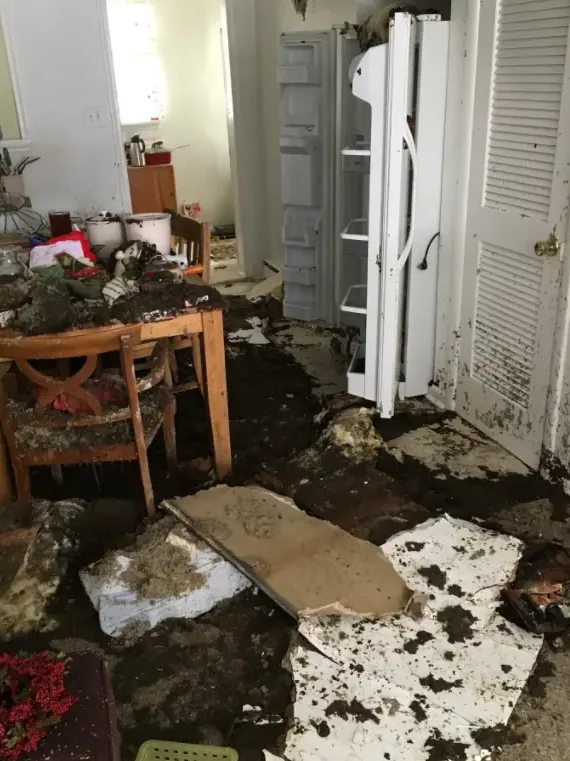
Beverly Hills borders the Santa Monica Mountains, so heavy rain does not stop at the roof. It also runs down slopes and streets, and a garage or lower floor is often where that water ends up. This post covers the first day, from safety to extraction to drying.
Key takeaways
- Water that enters from outside across the ground is treated as contaminated, not as clean rainwater.
- Stay out of standing water until power to the garage or lower level is off, because outlets, a panel or an opener may sit in or near it.
- Photograph how high the water rose on walls and stored items before anything is moved or thrown out.
- Extraction comes first, then drying of the slab, wall bottoms and framing, because wet materials keep holding water.
- Carpet, padding, cardboard and wet insulation that sat in runoff are usually removed rather than dried.
Why runoff finds Beverly Hills garages
Beverly Hills borders Bel Air and the Santa Monica Mountains on its northwest side. Rain that lands on those slopes does not soak away all at once.
Much of it travels downhill along driveways, gutters and streets.
Most residents live in the Flats, south of Sunset Boulevard and north of Santa Monica Boulevard. Runoff that leaves the slopes can reach streets lined with homes, and the garage door is often the lowest opening on the property.
Entry points that collect water
A garage is built to be open to the street, with a wide door and a slab that often sits low. That makes it the first place runoff meets a building.
- A driveway that tilts down toward the garage door sends water straight to the threshold.
- A worn rubber seal under the door leaves a gap at the slab.
- A lower level entry beside a retaining wall can collect water that pools against the door.
- A floor drain that cannot move water fast enough lets it back up onto the floor.
Why the first few inches matter
Even a shallow layer spreads across a garage slab and reaches stored boxes, drywall bottoms and any door into the house.
Once water crosses a threshold, it reaches flooring and cabinets, and the job grows from a garage cleanup into a whole floor.
What the February 2024 storms showed
From February 4 to 6, 2024, atmospheric rivers brought heavy rain to Southern California. Bel Air recorded a peak 24-hour rainfall of 12.42 inches, and Downtown Los Angeles received 4.1 inches on February 4, its wettest day since March 2003.
Los Angeles declared a state of emergency. Beverly Hills averages about 15 inches of rain in a typical year, so numbers like these show how much water can arrive in a single day.
Winters here are mild, with occasional rain and Santa Ana wind periods. Long dry stretches make a sudden storm feel unexpected, and that is when owners learn where water really goes.
The first hours: safety before cleanup
Standing water in a garage can hide electrical hazards. The first step is not mopping.
It is making the space safe.
- Switch off power to the garage and lower level at the panel only if the panel is dry and reachable without stepping in water. If not, stay out and ask an electrician for help.
- Leave the garage door opener, freezer and any tools that sit in the water alone until they are checked.
- Wear rubber boots and gloves, and keep children and pets out of the area.
- Close the door into the house and place towels or a barrier at the threshold to slow water moving inside.
- Take photos and short videos of the water, the walls and any stored items before moving them.
If water has crossed into the house
Water that reaches flooring or cabinets needs water extraction as soon as it is safe to enter.
The longer water sits, the further it wicks into subfloor, baseboards and the bottom of the wall.
Why runoff is handled as contaminated water
Water that crosses streets, yards and soil picks up bacteria, oil, fertilizer and debris. Restoration standards such as IICRC S500 place water that arrives from outside across the ground in Category 3, the most contaminated group.
That changes the plan. Porous materials that soaked up the water are usually removed, and hard surfaces are cleaned and treated before drying starts.
A flood water cleanup crew works in protective gear and keeps the affected area separate from the rest of the house.
What is usually removed
- Carpet and padding
- Cardboard boxes and paper goods
- Insulation at the bottom of wall cavities
- Drywall that wicked water above the floor
- Unsealed wood furniture that sat in the water
What can usually be cleaned
- The concrete slab
- Sealed metal shelving and tools
- Plastic bins with tight lids
- Framing members, once cleaned and dried
How extraction and drying work
Extraction comes first
Pumps and truck-mounted or portable extractors remove standing water. Wands and wet vacuums then lift what remains on the slab.
The aim is to get the water out before it wicks into wall bottoms and into anything stored against them.
Drying the slab, walls and framing
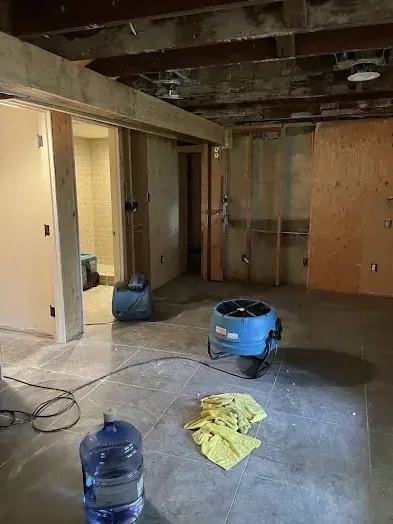
After the surface water is gone, air movers and dehumidifiers work on what the water soaked into. A technician takes moisture readings and compares them with a dry reference.
Structural drying continues until wet materials come within 2 to 4 points of it.
Drywall is often cut a few inches above the highest point the water reached so the cavity can dry. Concrete takes longer than it looks, since it holds moisture below the surface.
- Air movers push dry air across wet surfaces.
- Dehumidifiers pull moisture out of the air so it does not settle back.
- Moisture readings are repeated at each visit to show progress.
Documenting the loss for an insurance claim
Photos taken before cleanup do the most work in a claim. Note how high the water rose, list what was in the garage and keep damaged items until the insurer says they can go.
Policies treat runoff, flood and storm water differently. A standard homeowners policy may not cover water that comes from the ground, so read the wording or ask the insurer which coverage applies.
- Photos of the water, walls and stored items, taken before cleanup
- A written list of damaged belongings with rough age and value
- Moisture readings and drying logs from the restoration crew
- The date and time the water first appeared
Getting ready before the next atmospheric river
A little preparation shrinks the cleanup. Most of it takes one afternoon.
Owners who also want the roof and walls checked can read about storm water damage here.
- Clear leaves and debris from drains, gutters and the edge of the driveway.
- Replace a worn seal under the garage door.
- Lift boxes and tools off the slab onto shelves or pallets.
- Know where the panel is and who to ask for electrical work.
- Keep a flashlight, boots and gloves near the garage door.
Questions
Is rain that comes into a garage clean water?
Not usually. Rain that runs across streets, driveways and soil before it reaches the garage picks up bacteria and debris, so the cleanup treats it as contaminated.
How soon should standing water be removed?
As soon as it is safe to be in the space. Wet drywall, boxes and flooring can start to grow mold in 24 to 48 hours, so extraction and drying should start early.
Does homeowners insurance cover storm runoff?
It depends on the policy and the source of the water. Standard policies often separate storm damage from flood or ground water, so check the wording or ask the insurer before cleanup begins.
Can a shop vacuum do the job?
A shop vacuum can lift a thin layer, but it cannot pull water out of a slab, wall bottoms or padding. It can also spread contaminated water if it is emptied indoors.
Why does a concrete slab take so long to dry?
Concrete is dense and holds water below the surface. Dry air and dehumidifiers pull that moisture out slowly, so readings are repeated until the slab reaches the dry reference.