A sewer lateral is the pipe that carries wastewater from a building out to the city sewer. When it clogs, the wastewater has nowhere to go but back up through the lowest drain. The city encourages owners to maintain their laterals every year, and a backup is a sharp reminder of why.
Key takeaways
- The city encourages property owners to maintain sewer laterals every year. It is guidance, not a required inspection.
- Wipes, grease and food waste are the items to keep out of drains.
- A backup shows up at the lowest drain first: a floor drain, a shower or a ground level toilet.
- Sewage is Category 3 water, so porous materials it touched are removed and hard surfaces are cleaned and treated.
- Stop using water, keep people and pets away and take photos before cleanup starts.
What a sewer lateral does
Every building has a lateral, a pipe that runs from the house or business to the city sewer. Everything flushed or drained travels through it.
Sewage from Beverly Hills goes on to the Hyperion Treatment Plant.
The city encourages owners to maintain their sewer laterals every year. A plumber can clean a lateral and run a camera through it to look for roots, breaks and buildup.
Roots, grease, wipes and a broken or sagging section of pipe are the usual causes of a blockage. A camera or cable run shows where the blockage sits, which tells the plumber what repair is needed.
What to keep out of the drain
The city's message is simple: keep wipes, grease and food waste out of drains. These items cause a large share of blockages because they do not move on with the water.
Grease is the one that surprises people. It runs down the drain as a liquid, then cools and hardens into a coating that narrows the pipe a little more each time.
- Wipes, including ones sold as flushable, which do not break down like toilet paper
- Cooking grease and oil, which cools and coats the inside of pipes
- Food scraps and coffee grounds
- Paper towels, hygiene products and similar items
How a backup shows up
Early warning signs
- Slow drains in more than one fixture
- Gurgling from a toilet or drain when another fixture is used
- A sewage smell near a floor drain or in a lower bathroom
- Water rising in a shower or tub when the washer drains
When the water arrives
A blocked lateral sends wastewater to the lowest opening. Ground floor bathrooms, laundry rooms and garage floor drains are the usual outlets.
Once it starts, the flow can continue each time a fixture is used, so the first step is to stop using water in the building.
A local clog or a lateral backup
A toilet that overflows because of a clog in its own trap is a local problem. If water also comes up in a tub, a shower or a floor drain, the blockage sits further down the lateral.
That second case is the one that spreads, because more than one opening is carrying wastewater.
Why sewage is handled as Category 3
Sewage can carry bacteria and viruses. Industry standards such as IICRC S500 class it as Category 3, which is treated very differently from a clean supply leak.
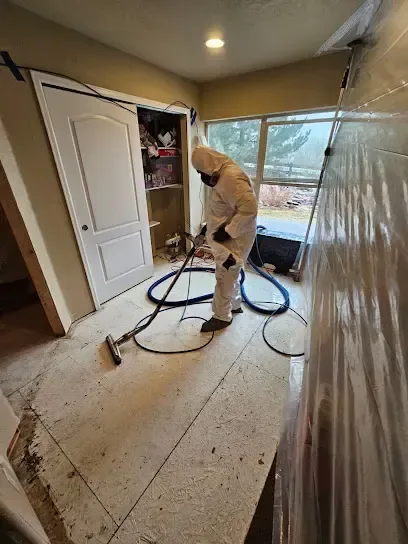
Household cleaners do not make porous materials safe again. Carpet, padding, drywall and insulation that sewage reached are removed and discarded.
Even a small amount counts. A few gallons that dry on a bathroom floor still leave bacteria in grout, baseboards and the bottom of the wall.
- Carpet and padding are removed.
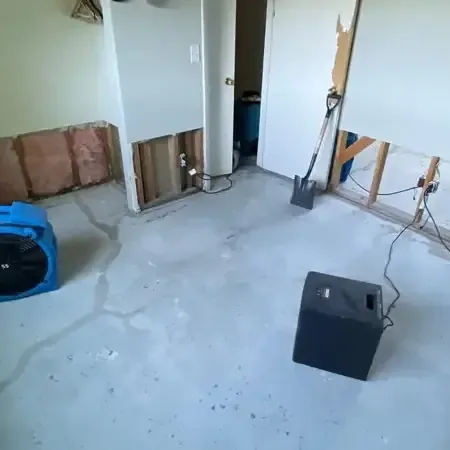
- Drywall and insulation that wicked sewage are cut out.
- Cabinet toe kicks and baseboards are taken off and cleaned or replaced.
- Hard surfaces such as tile and concrete are cleaned and treated.
What the cleanup involves
Extraction and removal
Pumps and extractors take up the standing sewage first. Crews wear protective suits, gloves and respirators and keep the work area closed off from the rest of the building.
Then the affected materials are bagged and removed. A sewage backup cleanup follows that order every time.
Cleaning, treatment and drying
Hard surfaces are cleaned and treated, and the area is dried with air movers and dehumidifiers. Water extraction and structural drying continue until readings reach a dry reference.
Before the area is closed back up
Before new drywall or flooring goes in, the crew checks that moisture readings have reached the dry reference and that surfaces have been cleaned and treated.
A plumber's note on the cause is useful at this point, and so are the photos and drying logs. Keep all of them for the insurer.
While waiting for help
Sewage contact can cause stomach illness and skin infections. Anyone who touches it washes with soap and water, and clothing that was in contact is laundered separately.
- Stop using sinks, toilets, showers and the washer until the blockage is cleared.
- Keep children, pets and anyone with a weak immune system out of the area.
- Do not use a household vacuum or mop on sewage. They spread it.
- Photograph the water, the drain and the damaged materials.
- Call a plumber to clear the blockage. A plumber clears the pipe, and a cleanup crew handles what the sewage reached.
Yearly care that lowers the odds
A backup damages floors, walls and belongings in addition to the pipe, so prevention is worth planning around the city's yearly reminder. Restaurants and apartment buildings face the same pattern on a larger scale, since more fixtures feed one lateral.
- Schedule a plumber's cleaning and camera check once a year, and keep the report.
- Ask the plumber about roots, sags and cracked joints in the pipe.
- Use a strainer in kitchen sinks and wipe greasy pans with a paper towel before washing.
- Put a small trash can in every bathroom so wipes and hygiene products stay out of the toilet.
- Know where the cleanout is and keep it clear so a plumber can reach it.
Questions
Is yearly lateral maintenance required in Beverly Hills?
The city encourages owners to maintain their sewer laterals every year. It is guidance, and an owner can talk with a plumber about what the pipe needs.
Where does the sewage go after it leaves the building?
It travels through the lateral to the city sewer and on to the Hyperion Treatment Plant.
Can a flushable wipe clog a lateral?
Yes. The city asks residents to keep wipes out of drains because they do not break down the way toilet paper does.
Is a small sewage backup safe to clean with a mop?
Not safely. Sewage can carry bacteria, and mops and household vacuums spread it. Even a small backup is Category 3.
Does a plumber or a cleanup crew handle a backup?
They do different jobs. A plumber clears the blockage and repairs the pipe, and a cleanup crew removes the sewage, handles the affected materials and dries the area.