South of Wilshire Boulevard, Beverly Hills has smaller lots and more apartment buildings than anywhere else in the city. A brown stain on the ceiling usually means water is coming from the unit above, a shared pipe or the roof. The first job is to find out which.
Key takeaways
- In the 2020 census, 58.0 percent of Beverly Hills homes were renter-occupied, so many leaks involve a tenant, a neighbor and a building owner.
- Report a ceiling stain to the building owner or manager in writing right away, with photos.
- Mark the edge of the stain with a pencil and check it again later to see whether it is growing.
- A wet ceiling is opened so the cavity above it can dry. Paint hides a stain and does not remove moisture.
- Drying the joist bays, insulation and the room below takes days, and moisture readings show when it is done.
Why ceiling leaks are common South of Wilshire
The 2020 census counted 16,242 housing units in Beverly Hills, and 58.0 percent were renter-occupied. South of Wilshire, smaller lots hold the most apartment buildings in the city.
Stacked kitchens, shared walls and bathrooms above bathrooms mean one unit's water problem can become another unit's ceiling.
Many apartment buildings also share vertical pipes that run between floors. A failure in one of them can wet the ceilings of several units at once.
Common sources of the water
- A supply hose or drain at a washer or dishwasher in the unit above
- A tub or shower overflow, or a failed seal around a bathtub
- A split or pinhole in a pipe running through a shared wall or floor
- A roof or balcony leak on the top floor
Why the stain is not always under the leak
Water follows framing. It can travel along a joist or a pipe before it drips through, so the stain may sit well away from the source.
That is why tracing the leak matters before anything is repaired.
Tracing the source
Finding the source first keeps the same leak from wetting the ceiling again after it has been dried.
- Ask the unit above whether a tub, washer, dishwasher or toilet was in use when the stain appeared.
- Check under sinks and behind appliances for wet cabinet bottoms.
- Watch the stain after a dry spell. A stain that grows with no rain points to plumbing, and one that grows only after rain points to the roof or a balcony.
- Ask the building owner or manager to have a plumber test the supply and drain pipes that serve the unit above.
When the water is not clean
Water from a supply pipe or an appliance supply hose starts out clean. Water from a toilet, a tub drain or a washer drain above carries soap, waste and bacteria, and it is treated as contaminated.
The type of water changes what is removed from the ceiling. Contaminated water means wet drywall and insulation are cut out and discarded rather than dried.
Appliance and pipe leaks
Slow leaks from an appliance or supply hose can run for weeks before a stain shows below.
A split pipe inside a wall is a different job, and a burst or pinhole pipe leak usually needs the wall opened as well.
Who to tell, and in what order
In a rented unit, the building owner or manager controls the pipes, the walls and the repair. Tell that person in writing, with photos, before any ceiling is opened.
If the leak came from the unit above, that household's belongings and appliances may be involved. Keep the message factual and leave out guesses about fault.
- Send photos and the date the stain was first seen.
- Ask who will call the plumber and who will arrange drying.
- Keep a copy of every message.
- Tell a renter's insurance company if one is in place, since policies differ on water that comes from another unit.
Opening the ceiling and drying the joist bays
What the crew opens
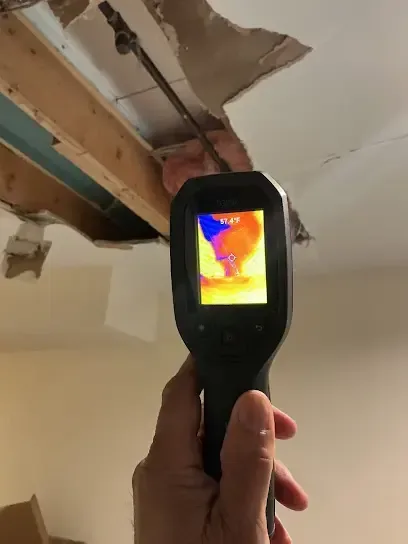
Drywall that is wet, sagging or stained is cut back until dry material shows. Wet insulation in the bay is removed.
A thermal camera and a moisture meter show how far the water spread, so the opening matches the damage. A ceiling leak water damage job starts with that map.
How the cavity dries
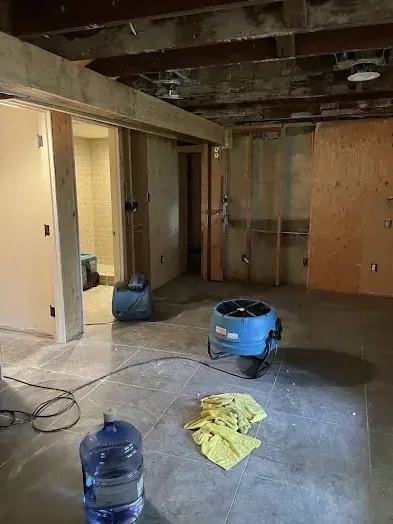
Air movers push dry air through the opened bay while a dehumidifier pulls moisture out of the room. The room below is dried at the same time, since water often runs down the walls.
Structural drying is finished when readings come within 2 to 4 points of a dry reference.
What happens to the room below
A ceiling leak seldom stops at the ceiling. Drips reach floors, furniture and the tops of cabinets, and water can run down the inside of a wall.
- Wet carpet padding is usually removed, and carpet is lifted and dried.
- Hardwood is checked for cupping and dried slowly.
- Baseboards come off so the wall bottoms can dry.
- Furniture is moved to a dry area and lifted off wet floors.
What the dry-out looks like day to day
Drying equipment usually runs around the clock for several days. A technician returns each day to read the moisture meters, move equipment and decide whether anything can come out.
- Air movers run for several days, and the noise is part of the process.
- Dehumidifiers collect water that has to be emptied or drained.
- Occupants can usually stay in the unit, though the affected room is closed off.
- Equipment comes out only after readings reach the dry standard.
Mistakes that slow the repair
Each of these delays the point where the building is dry, and the longer materials stay wet, the more of them need to be replaced.
- Painting over the stain while the ceiling is still wet.
- Waiting for the stain to dry on its own. Damp insulation can stay wet for weeks.
- Running a household fan only, which moves air but does not remove moisture.
- Ignoring a musty smell. It points to water still trapped in the cavity.
Questions
Who pays when a ceiling leak comes from the unit above?
It depends on the cause, the lease and the insurance on each side. The building owner and the insurers sort out fault. A tenant's first task is to stop further damage and document it.
Can paint cover a water stain?
Paint can hide the color but not the moisture. If the cavity above is still wet, the stain returns and the material keeps breaking down.
Is a sagging ceiling an emergency?
Yes. A bulging ceiling holds water and can fall. Keep people out of the room, move belongings and ask for help promptly.
How long does a ceiling take to dry?
Most opened ceilings dry in 3 to 5 days, but it depends on how long the materials were wet and how much was affected. Readings, not a calendar, decide when it is done.
Should the ceiling be opened if the stain is small?
A small stain can still hide a wet cavity. Moisture readings and a thermal camera show whether the material above is wet before anyone cuts.