El Segundo sits next to the Hyperion plant, the largest sewage treatment facility in the Los Angeles area. In July 2021 the plant discharged 17 million gallons of untreated sewage through its ocean outlet pipes, and swim areas were closed. The news left some residents asking whether sewage could come up in homes. The 2021 event was an ocean discharge, and a household backup works very differently.
Key takeaways
- The July 2021 Hyperion event was a discharge of 17 million gallons through ocean outlet pipes. It was not a flood and not a backup into homes.
- County Public Health closed the swim areas at Dockweiler State Beach and El Segundo Beach, sampled the water for two consecutive days and reopened them after results met State standards.
- A backup in a house starts with a blocked drain or lateral and shows up at the lowest opening in the building.
- Sewage inside a building is Category 3 whatever the cause, and porous materials it touched are removed.
- A beach closure is handled by public health. A backup is handled by a plumber and a cleanup crew.
What the 2021 Hyperion release was
The Hyperion Water Reclamation Plant sits next to Dockweiler State Beach on Santa Monica Bay and is operated by the City of Los Angeles Bureau of Sanitation. It is the largest sewage treatment facility in the Los Angeles area.
In July 2021 the plant discharged 17 million gallons of untreated sewage through its ocean outlet pipes. Los Angeles County Public Health closed the swim areas at Dockweiler State Beach and El Segundo Beach.
- Discharge: 17 million gallons of untreated sewage through the ocean outlet pipes
- Response: swim areas closed at Dockweiler State Beach and El Segundo Beach
- Testing: ocean water sampled for two consecutive days
- Outcome: swim areas reopened after results met State standards
Why that event did not put sewage in houses
The release happened at the plant's ocean outlet pipes, downstream of every household drain. Nothing about it sent wastewater back up the pipes that serve homes.
A house is connected to the sewer by its own lateral, and a backup there has a local cause. Treating the two as the same event can lead an owner to wait for news when the real problem is a blocked pipe.
- Location: a plant release happens at the ocean outlet pipes, and a backup happens at a drain inside a building.
- Cause: a release is a plant event, and a backup is a blockage or a damaged pipe.
- Response: public health handles a beach, and a plumber and a cleanup crew handle a house.
- Control: an owner cannot change a beach closure, but can act on a drain right away.
How a household backup starts
Common causes
Almost every household backup begins with something that narrows or blocks the lateral or the drain.
- Cooking grease that cooled and hardened inside the pipe
- Wipes and hygiene products that do not break down
- Roots that grew into a joint or crack
- A sagging or broken section of pipe that holds water and debris
Where the water appears
Wastewater takes the lowest opening it can find. Ground floor bathrooms, laundry rooms and floor drains are the usual outlets.
If water comes up in a tub or floor drain while a toilet is flushed, the blockage is deeper than a single fixture.
How the cleanup works
Whatever the cause, sewage inside a building is Category 3 water under industry standards such as IICRC S500. The cleanup follows the same steps each time.
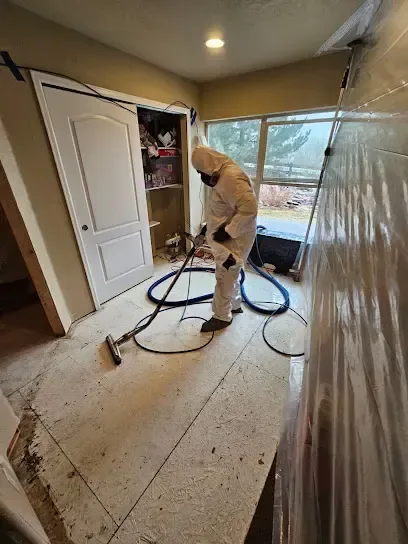
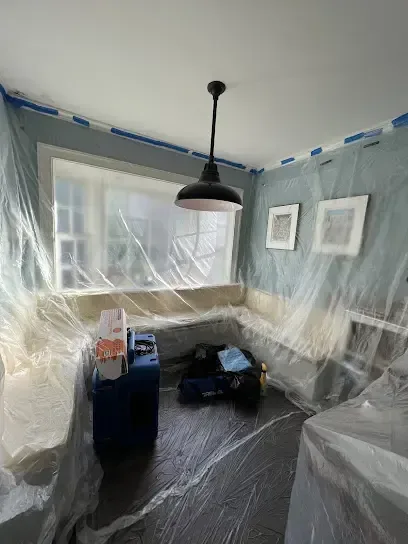
A sewage backup cleanup starts with protective gear and a closed-off work area, then removal of the standing water and the materials it touched.
Extraction and removal
Pumps and extractors remove the standing sewage first. Water extraction lowers the level, then wands and vacuums lift what is left on the floor.
Carpet, padding, wet drywall and insulation that sewage reached are cut out and bagged.
The hard-to-see places get attention too, including the bottom of walls, cabinet bases and the inside of floor drains.
Cleaning, treatment and drying
Hard surfaces are cleaned and treated, and the area is dried with air movers and dehumidifiers. Readings decide when drying is done, and the dry reference is the same one used on any water loss.
The plumber's work on the lateral should be finished before the area is closed back up, so the blockage does not return and wet the new materials.
Homes and businesses nearby
The 2010 census counted 7,410 housing units here, and 57.2 percent of occupied homes were rented. In a rented home, a backup often involves a tenant, an owner and a neighbor, so a written report with photos helps everyone.
The eastern part of the city is an industrial and office district with no homes. Roughly three quarters of the city's land is used for industrial and commercial purposes.
Businesses face the same cleanup process, with the added task of keeping people and stock out of the affected area. Owners can also read about structural drying for wet floors and walls.
In either setting, the first written record matters. A short note with the date, the fixtures affected and a few photos helps the plumber, the cleanup crew and the insurer work from the same facts.
What to do in the first hours of a backup
For help with the area as a whole, see the local water damage restoration page.
- Stop using sinks, toilets, showers and the washer.
- Keep children, pets and anyone with a weak immune system out of the area.
- Do not use a household vacuum or mop on sewage. They spread it.
- Photograph the water, the drain and any damaged materials.
- Call a plumber to clear the blockage and a cleanup crew to handle what the sewage reached.
- Tell the building owner right away if the home is rented.
Questions
Did the 2021 Hyperion release flood homes in El Segundo?
No. It was a discharge of 17 million gallons through the plant's ocean outlet pipes, and the response was to close the swim areas at two beaches.
How did officials decide the beaches were safe again?
County Public Health sampled the ocean water for two consecutive days and reopened the swim areas after results met State standards.
What causes sewage to back up into a house?
A blocked or damaged lateral or drain. Grease, wipes, roots and broken or sagging pipe are common causes, and the water comes up at the lowest opening.
Is the cleanup different if the cause is outside the house?
No. Sewage inside a building is Category 3 whatever the cause, and the cleanup steps are the same. Who is responsible for the blockage is a separate question for the owner, plumber and insurer.
Who closes a beach after a sewage release?
In the 2021 event, Los Angeles County Public Health closed the swim areas and reopened them after the testing results met State standards.