Structural Drying in Hawthorne, CA
Wet framing inside closed walls does not dry on its own, even in a mild climate. A crew sets drying equipment and checks moisture readings until the structure is dry.
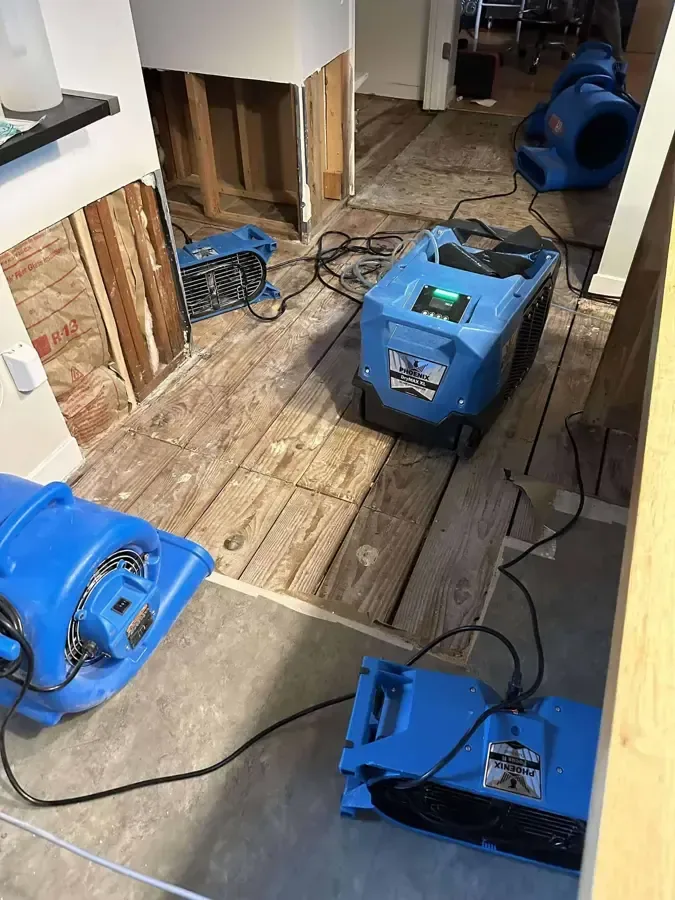
Hawthorne has a mild, dry-summer climate with about 263 sunny days a year, which leads many owners to expect that open windows will finish the job. They will not. Water inside closed walls, under flooring and in framing stays trapped while the room feels dry, and trapped moisture can swell wood and feed mold. Equipment and moisture readings do the work that sunshine cannot.
How drying equipment works
Drying is controlled evaporation, and each tool has a job:
- Air movers sweep dry air across wet floors and walls
- Dehumidifiers pull the moisture out of the air so it does not settle again
- Cavity drying pushes air through openings in drywall or baseboards
- Moisture meters show where the water is and when it is gone
Moisture that stays inside framing can swell wood and feed mold, so drying should start before the walls are closed up.
Talk through the dryingReading the results
Readings are taken at the start and at every visit, then compared with a dry reference material. Equipment is moved or removed as sections reach the target, so nothing runs longer than it needs to.
Standing water comes out first through water extraction, and drying follows.
Records for owners
Readings from each visit, equipment logs and photos build a record that shows the drying followed the numbers. Owners, landlords and adjusters can see when the structure reached dry, and repairs can start from there. Related losses are covered under burst pipe water damage.
What does structural drying and dehumidification cost in Hawthorne, CA?
Drying cost follows the number of rooms and how dense the wet materials are. Light wetting in one room is the low end, heavier wetting across several rooms sits in the middle, and dense soaked materials reach the top.
- Fans and dehumidifier
- Few visits
- Readings taken
- More equipment
- Wall cavities
- More visits
- Thick floors and walls
- Longest run
- Careful monitoring
Treat these as planning ranges, not a quote: the category of water, how many square feet got wet, the material class and how soon drying began set the final figure. The water damage cost calculator narrows the range for one loss.
When the equipment leaves
Air movers and dehumidifiers stay until wet materials match a reading from dry material elsewhere in the same building, usually within 2 to 4 points, and every daily reading is kept for the adjuster.
Further reading: OSHA flood cleanup safety and EPA flood cleanup advice.
Structural drying and dehumidification across Hawthorne and nearby communities
Crews cover these neighborhoods at any hour, including nights, weekends and holidays.
Drying crews work throughout the city, along Aviation Boulevard, Rosecrans Avenue and Imperial Highway, in ZIP codes 90250 and 90251, in homes, rented units and shops where water has soaked walls and floors, and where framing stays damp after the standing water is gone.
The same service nearby: structural drying and dehumidification in Beverly Hills, Inglewood, Manhattan Beach.
Water damage restoration in Hawthorne › Every town covered ›
Structural Drying and Dehumidification: questions and answers
Can wet walls dry without equipment?
Not reliably. Even with sunny weather outside, water inside closed walls and under floors has nowhere to go, so it needs airflow and dehumidifiers to leave.
How long does structural drying take?
It depends on what got wet and how deeply. Dense materials take longer than drywall, and the readings, not a calendar, decide when the equipment can come out.
Why is a dehumidifier needed along with fans?
Fans move moisture off surfaces into the air. A dehumidifier then removes it from the air, so it cannot settle back on walls and floors.
Do the walls always have to be opened?
Not always. Small holes or removed baseboards can let air reach the cavity, while heavily soaked drywall or insulation is cut out and replaced.
What affects drying costs?
The number of rooms, the materials and how long the equipment runs. The ranges below run from light wetting in one room to dense materials that were soaked through.
Walls and floors are still damp after the water
Say what was wet and for how long, and the crew will explain the equipment, the readings and the point at which the structure counts as dry.
(888) 578-6508Plan the drying